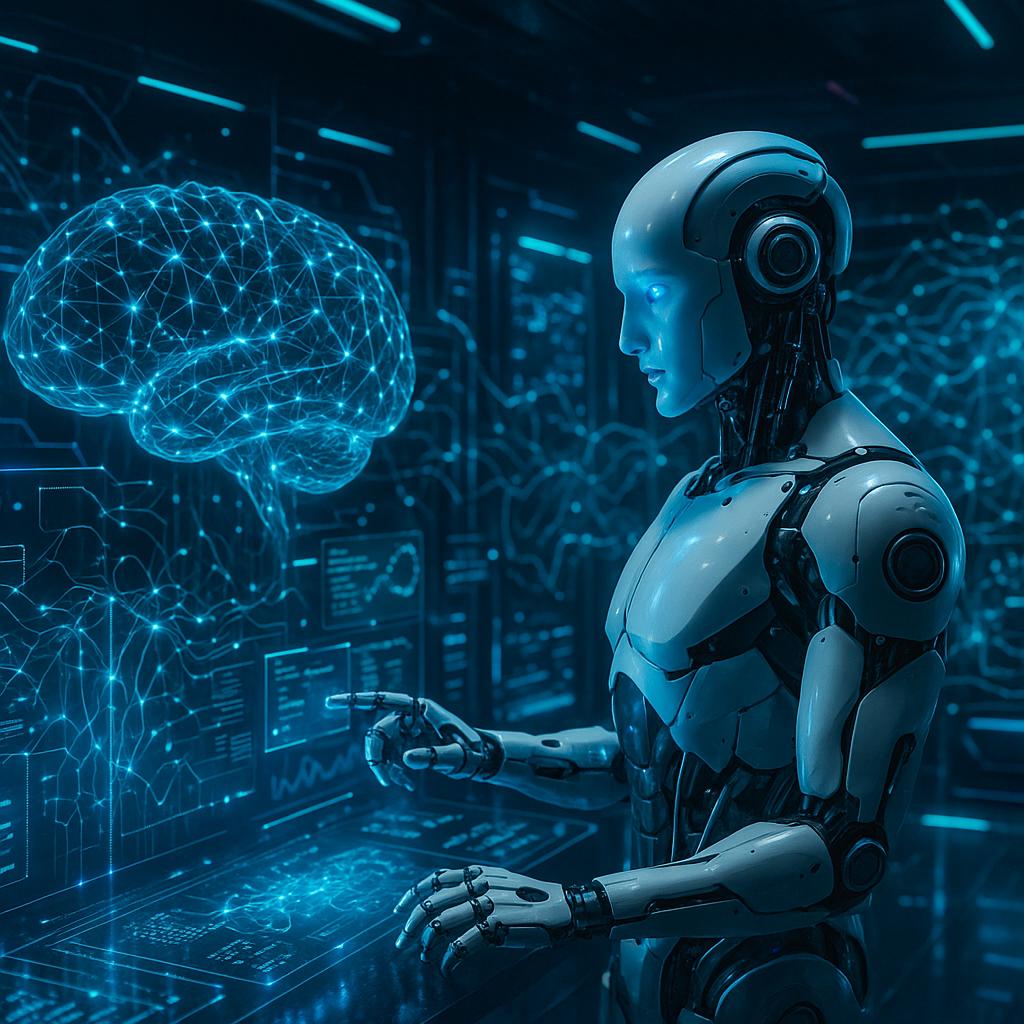
Imagine a world where software doesn't just respond to commands but anticipates your needs, learns from interactions, and autonomously solves problems. This isn't science fictionâit's the power of AI Agent Development, and it's revolutionizing industries from healthcare to finance. Whether you're a developer, entrepreneur, or tech enthusiast, understanding how to create intelligent agents could be your next big competitive advantage.
Introduction to AI Agent Development
AI agents are software programs that perceive their environment, make decisions, and take actions to achieve specific goals. Unlike traditional software, they leverage machine learning, natural language processing, and decision-making algorithms to operate autonomously or semi-autonomously. From virtual assistants like Siri to complex trading bots, AI agents are transforming how we interact with technology.
This guide will walk you through the fundamentals of AI Agent Development, providing practical steps to build your own intelligent agents. Whether you're a beginner or an experienced developer, you'll gain insights into the tools, frameworks, and best practices needed to succeed.
Understanding AI Agents: Types and Use Cases
What Are AI Agents?
AI agents are autonomous entities that can perform tasks without human intervention. They can be classified into different types based on their capabilities:
- Simple Reflex Agents: Respond to immediate inputs without past knowledge (e.g., chatbots).
- Model-Based Agents: Use internal models to make decisions (e.g., self-driving cars).
- Learning Agents: Improve over time by learning from data (e.g., recommendation systems).
"The future of AI isn't just about automationâit's about creating agents that understand context and act intelligently." â Andrew Ng, AI Pioneer
Real-World Applications
AI agents are already making waves across industries:
- Healthcare: Diagnosing diseases, managing patient data.
- Finance: Automating trades, detecting fraud.
- Customer Service: Chatbots handling inquiries 24/7.
- Gaming: NPCs that adapt to player behavior.
Getting Started with AI Agent Development
Step 1: Define Your Agent's Purpose
Before diving into coding, clarify what your AI agent should do. Ask yourself:
- What problem does it solve?
- Who is the target user?
- What data will it need?
Step 2: Choose the Right Tools and Frameworks
Several frameworks can help you build AI agents efficiently:
- Python Libraries: TensorFlow, PyTorch, Scikit-learn.
- AI Development Platforms: IBM Watson, Google Dialogflow.
- Automation Tools: Apache Airflow, Luigi.
Step 3: Gather and Preprocess Data
Data is the fuel for AI agents. Ensure your data is:
- Relevant: Directly related to the agent's task.
- Clean: Free from errors and inconsistencies.
- Structured: Organized for easy analysis.
Building Your First AI Agent: A Step-by-Step Guide
Step 1: Design the Agent Architecture
Outline the components of your agent:
- Sensors: Input sources (e.g., user queries, sensors).
- Actuators: Output mechanisms (e.g., API calls, responses).
- Decision-Making Module: Logic for actions.
Step 2: Implement Core Functionality
Start with a simple agent, such as a chatbot:
# Example: Simple chatbot using NLP
import nltk
from nltk.chat.util import Chat, reflections

pairs = [
    ["hi", ["Hello!", "Hi there!"]],
    ["how are you?", ["I'm good, thanks!"]],
]

chatbot = Chat(pairs, reflections)
chatbot.converse()
Step 3: Train and Test Your Agent
- Training: Use historical data to improve responses.
- Testing: Simulate real-world scenarios to identify flaws.
Advanced Techniques in AI Agent Development
Reinforcement Learning for Autonomous Agents
Reinforcement learning (RL) helps agents learn from trial and error. Key concepts include:
- Rewards: Positive or negative feedback for actions.
- Policies: Strategies for decision-making.
- Value Functions: Estimating future rewards.
Natural Language Processing (NLP) for Conversational Agents
NLP enables agents to understand and generate human language:
- Tokenization: Breaking text into words or phrases.
- Intent Recognition: Identifying user goals.
- Entity Extraction: Pulling out key details (e.g., dates, names).
Best Practices for Successful AI Agent Development
Ensure Ethical AI Development
- Bias Mitigation: Avoid discriminatory outcomes.
- Transparency: Explain how decisions are made.
- Privacy: Protect user data.
Optimize for Scalability
- Modular Design: Break down components for easier updates.
- Cloud Integration: Use scalable infrastructure like AWS or GCP.
Frequently Asked Questions
What skills are needed for AI Agent Development?
You'll need knowledge of:
- Programming (Python, JavaScript).
- Machine learning algorithms.
- Data analysis and preprocessing.
How long does it take to build an AI agent?
The timeline varies:
- Simple agents: A few days to weeks.
- Complex agents: Months to years.
Can AI agents replace human jobs?
AI agents augment rather than replace human roles, automating repetitive tasks while freeing up humans for creative work.
📚 Related Articles You Might Find Helpful
- 10 Proven ChatGPT Advanced Features Strategies That Actually Work
- 10 Proven TypeScript 5.5 Strategies That Actually Work
- Vercel Deployment Explained: Everything You Need to Know in 2025
Conclusion
AI Agent Development is an exciting and rapidly evolving field with immense potential. By following this guide, you're well on your way to building intelligent, autonomous systems that can transform industries. Ready to dive in? Start with a simple project, experiment with different frameworks, and keep refining your skills.
ð Your next step: Explore Python libraries like TensorFlow or sign up for an AI development course to deepen your expertise. The future of AI is in your hands!