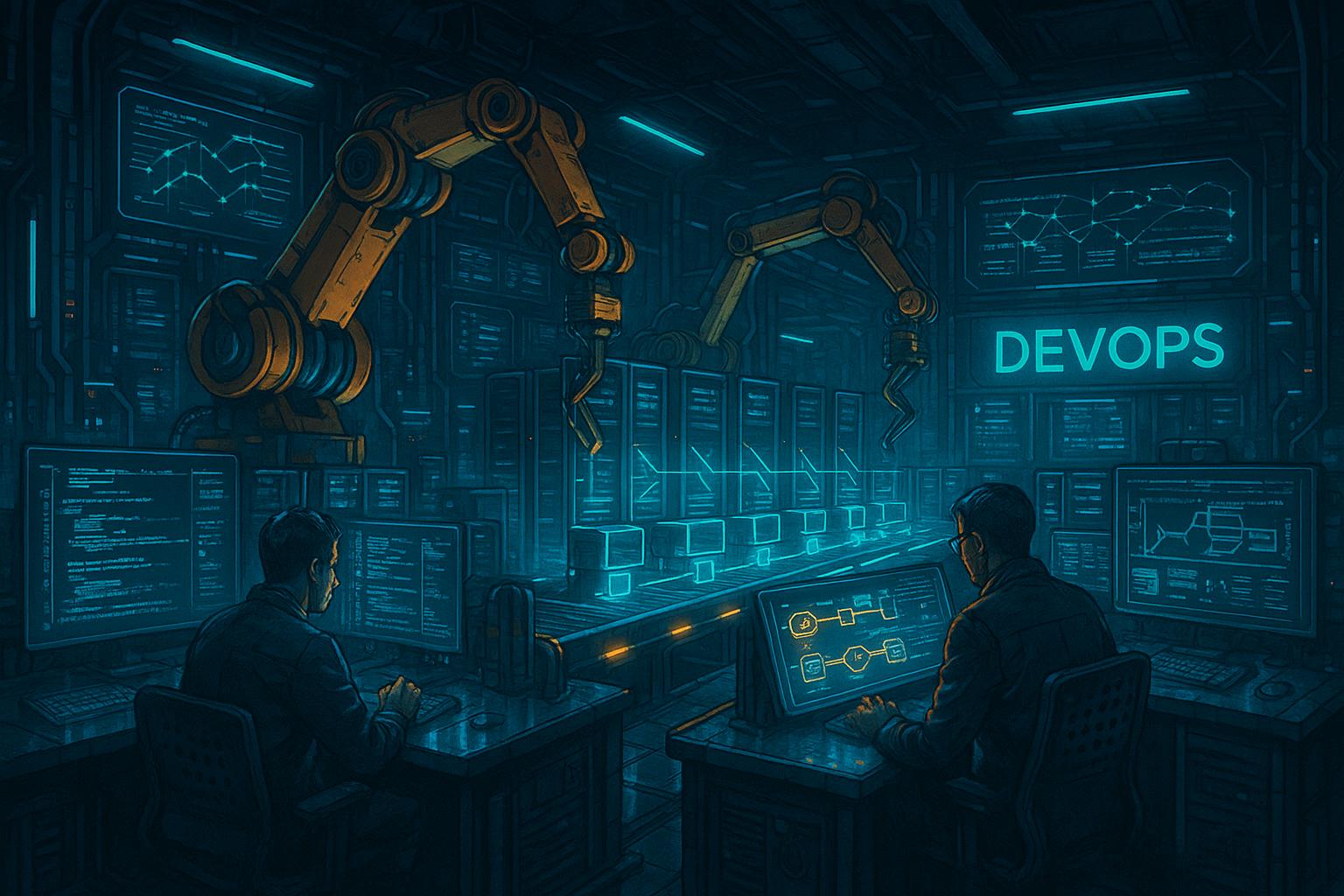
The Complete CI/CD Handbook for Professionals 2025
Continuous Integration and Continuous Delivery (CI/CD) have revolutionized software development, enabling teams to deliver high-quality software faster and more efficiently than ever before. 🚀 As we move into 2025, the demand for CI/CD practices continues to grow, with industry reports showing that organizations adopting these methodologies see a 40% reduction in deployment times and a 30% decrease in production defects. Whether you're a developer, DevOps engineer, or IT manager, mastering CI/CD is no longer optional—it's essential.
Introduction with Context
CI/CD is more than just a buzzword; it's a cultural shift in how software is built, tested, and deployed. By automating the entire software delivery pipeline, teams can push updates frequently, reduce manual errors, and ensure faster feedback loops. In 2025, the adoption of CI/CD is expected to reach 90% among enterprises, making it a critical skill for professionals in the tech industry.
But what exactly is CI/CD, and how can you implement it effectively? This handbook will guide you through everything you need to know, from foundational concepts to advanced strategies, ensuring you stay ahead of the curve.
What is CI/CD?
CI/CD stands for Continuous Integration and Continuous Delivery (or Deployment). These are two interconnected practices that streamline the software development lifecycle.
Key Components of CI/CD
- Continuous Integration (CI): Developers merge code changes frequently, often multiple times a day, into a shared repository. Automated builds and tests run on each commit to catch issues early.
- Continuous Delivery (CD): Ensures that code is always in a deployable state. Changes are automatically pushed to production after passing automated tests.
- Continuous Deployment: Takes CD a step further by automatically deploying every change that passes tests to production.
Why CI/CD Matters in 2025
- 📈 Faster Time-to-Market: Reduces deployment times from weeks to minutes.
- 🛡️ Improved Code Quality: Automated testing minimizes bugs and vulnerabilities.
- 💼 Scalability: Supports Agile and DevOps methodologies seamlessly.
- 🌍 Remote Collaboration: Facilitates seamless collaboration across distributed teams.
Setting Up Your CI/CD Pipeline
Building a robust CI/CD pipeline requires careful planning and the right tools. Here’s a step-by-step guide to get you started.
Step 1: Choose the Right Tools
Not all CI/CD tools are created equal. Some popular options in 2025 include:
- Jenkins – Open-source and highly customizable.
- GitHub Actions – Native integration with GitHub repositories.
- GitLab CI/CD – All-in-one DevOps platform.
- CircleCI – Cloud-based with excellent scalability.
- Azure DevOps – Microsoft’s end-to-end solution.
Step 2: Automate Your Build Process
Automating builds ensures consistency and reduces human error. Key steps include:
- 🔧 Configuring Your Build Server: Set up triggers for builds on code commits.
- 📂 Using Version Control: Store all code in repositories like Git.
- 🚀 Running Unit Tests: Automate test execution to catch issues early.
Step 3: Implement Continuous Testing
Testing is the backbone of CI/CD. Automate:
- Unit Tests – Validate individual components.
- Integration Tests – Ensure components work together.
- End-to-End Tests – Simulate real-user scenarios.
- Security Scans – Detect vulnerabilities before deployment.
Best Practices for CI/CD in 2025
Adopting CI/CD isn’t just about tools—it’s about culture and strategy. Here are some best practices to follow:
1. Keep Your Pipelines Simple and Fast
- 🕒 Aim for pipeline runs under 10 minutes.
- Avoid complex workflows that slow down feedback.
2. Monitor and Optimize Performance
- Use tools like Prometheus and Grafana for real-time monitoring.
- Continuously refine your pipeline based on performance metrics.
3. Ensure Security at Every Stage
- 🔒 Implement static application security testing (SAST) and dynamic application security testing (DAST).
- Use role-based access control (RBAC) to manage permissions.
4. Foster a Culture of Collaboration
- Encourage cross-functional teams to work together.
- Hold regular retrospectives to improve processes.
Common Challenges in CI/CD and How to Overcome Them
While CI/CD offers immense benefits, it also comes with challenges. Here’s how to tackle them:
1. Flaky Tests
- Solution: Use stable testing frameworks and isolate test environments.
2. Pipeline Bottlenecks
- Solution: Parallelize tests and optimize resource allocation.
3. Security Concerns
- Solution: Integrate security into every stage of the pipeline.
4. Resistance to Change
- Solution: Train teams and demonstrate the benefits of CI/CD.
CI/CD Trends in 2025
The CI/CD landscape is evolving rapidly. Here are the top trends to watch:
1. AI-Driven Automation
- AI is enhancing pipeline optimization and predictive analytics.
2. Shift-Left Security
- Security is being integrated earlier in the development cycle.
3. Serverless CI/CD
- Cloud-native CI/CD solutions are gaining traction.
4. GitOps for CI/CD
- Managing infrastructure as code via Git repositories.
Conclusion with Call-to-Action
CI/CD is no longer optional—it’s a necessity for modern software development. By adopting CI/CD best practices, you can accelerate deployments, improve code quality, and drive innovation. Start by assessing your current workflows, choosing the right tools, and fostering a culture of continuous improvement.
🚀 Ready to transform your development process? Implement CI/CD today and stay ahead of the competition!
FAQ
Q: What’s the difference between CI and CD?
A: CI focuses on integrating code changes frequently, while CD extends this by ensuring the code is always deployable.
Q: How can I measure the success of my CI/CD pipeline?
A: Track metrics like deployment frequency, lead time for changes, mean time to recovery (MTTR), and test pass rate.
Q: Is CI/CD only for large enterprises?
A: No! CI/CD benefits teams of all sizes, from startups to Fortune 500 companies.
Q: How often should I update my CI/CD pipeline?
A: Regularly—at least every 3-6 months to incorporate new tools and best practices.
By following this handbook, you’ll be well-equipped to master CI/CD in 2025 and beyond. Happy automating! 🎉